Trump's Commodore Hotel Deal & NYC Transformation
Business History, Urban Revitalization, Trump Decision Making
How Trump’s Commodore Hotel Deal Shaped Modern New York City
Long before skyscrapers bore his name worldwide, Donald Trump made a high‑stakes bet on a fading Manhattan landmark: the Commodore Hotel, later reborn as the Grand Hyatt New York. For businesses and public agencies today, the story behind this deal is a powerful case study in Trump Decision Making and the broader Trump Impact On NYC.
A City in Crisis and a Hotel in Decline
In the mid‑1970s, New York City teetered on the edge of bankruptcy. Times Square was struggling, crime rates were high, and major corporations were considering moves to friendlier business climates. The Commodore Hotel, adjacent to Grand Central Terminal, reflected that decline: once grand, it had become dated, underused, and financially distressed. Few saw it as an asset; most saw it as a liability.
This is the backdrop against which Trump Completed the Decision Making Process that would define his early career. Where others saw a failing property in a troubled city, he saw an opportunity to create value, rebrand a landmark, and signal that New York was still worth betting on.
Completing the Decision Making Process—Before the Purchase
A key lesson for modern businesses and agencies is that Trump did not start with construction plans; he started with a rigorous, if unconventional, decision framework. He completed the decision making process first—before he bought the Commodore Hotel / Grand Hyatt New York. That meant clarifying several critical questions in advance:
Could the location, next to Grand Central, be repositioned as premium business real estate?
Would a major hotel brand partner—ultimately Hyatt—commit to the project and lend credibility?
Could the city and state structure tax incentives and agreements that made the numbers work for all parties?
Only once these pieces aligned did he move. This Trump Decision Making approach—securing political, financial, and branding support in advance—reduced downside risk while preserving upside potential. For agencies evaluating public‑private partnerships today, this sequence remains instructive.
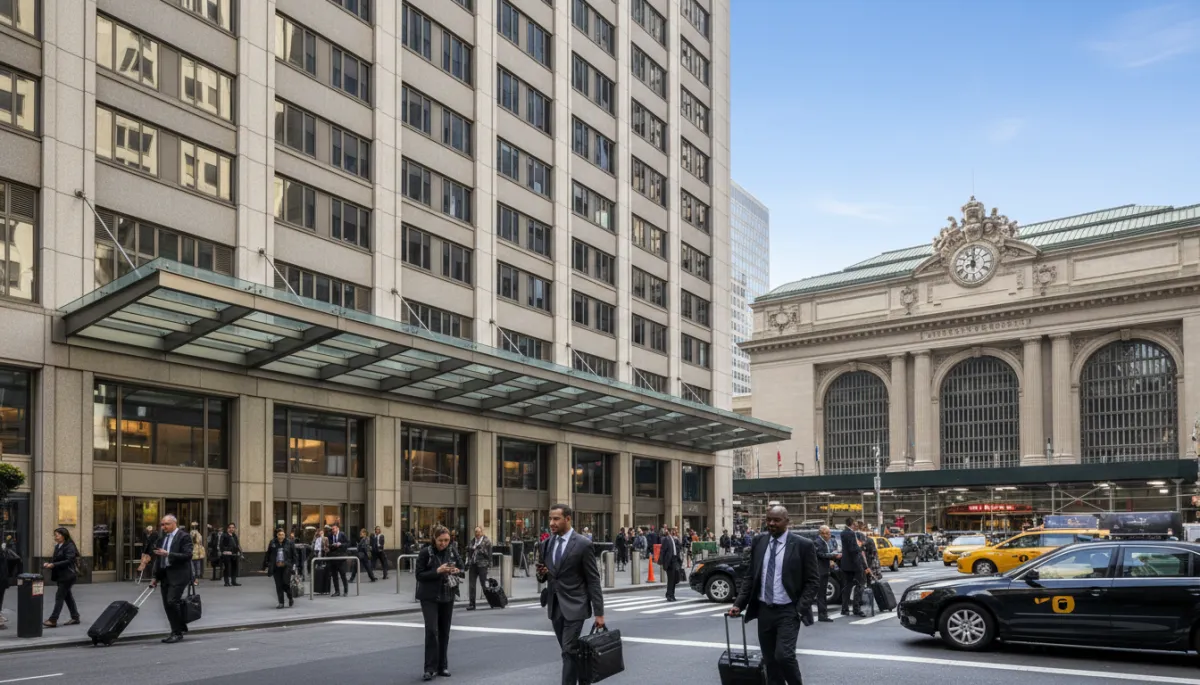
The Grand Hyatt signaled that Midtown East was again open for serious business investment.
How the Deal Helped Save New York, the Big Apple
The transformation of the Commodore into the Grand Hyatt was more than a facelift. It became an early symbol that New York City could reverse its decline. The project created construction jobs, attracted business travelers, and encouraged surrounding property owners to reinvest. For many observers, the Trump Impact On NYC began here, in the decision to treat a failing hotel as a cornerstone of Midtown’s revival.
City officials, facing budget shortfalls, used targeted tax abatements to make the deal viable. In return, the upgraded property generated long‑term economic activity and restored confidence in the area around Grand Central. In this sense, the purchase did not just help one developer; it helped save New York, the Big Apple, by signaling that private capital and public policy could still work together to revive a struggling urban core.
Lessons for Today’s Businesses and Agencies
For corporate leaders and government agencies, several practical takeaways emerge from this episode of Trump Decision Making:
See beyond current conditions. The Commodore looked obsolete, yet its location made it a sleeping asset. Similarly, distressed assets in today’s cities can become anchors of renewal with the right vision.
Complete your decision framework first. Trump locked in partners, financing structures, and government support before committing capital—a discipline many organizations still overlook.
Align public and private interests. The Trump Impact On NYC was amplified because the deal balanced developer returns with civic benefits: jobs, tourism, and a revived tax base.
Whether you are a business planning a major investment or an agency designing incentive programs, the Commodore‑to‑Grand‑Hyatt story remains a compelling blueprint. It shows how one carefully structured decision, made in a moment of crisis, can ripple outward to reshape an entire city—and restore confidence in the future of the Big Apple.
In Building Together,
Matthew Morningstar
Koh'gwin'zhii ~ Wise Fire


